
Source date: 2026-06-02
Close Interested in this topic?
Receive an email as soon as an article is published by the editorial team on: Training, work, Employees
Close This topic has been added to your alerts
You will receive an email as soon as an article is published by the editorial team on: Training, work, Employees.
You can unsubscribe at any time via my account > my alerts.
A differential allowance will be paid to public servants earning below the minimum wage Published on June 3, 2026 - Service Public / Directorate of Legal and Administrative Information (Prime Minister)
The differential allowance is a mechanism designed to ensure that public servants receive remuneration at least equal to the minimum wage (SMIC). This mechanism was implemented following the 2.41% increase in the SMIC on June 1, 2026. The amount of the allowance depends on the servant's base pay and their working hours (full-time or otherwise).
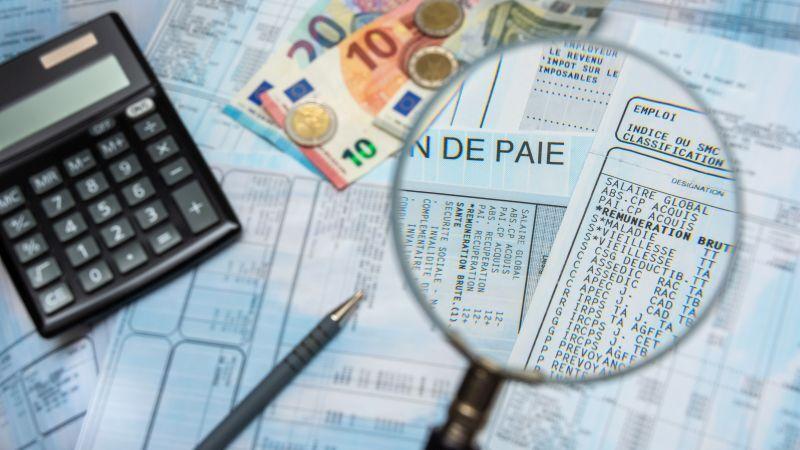
The SMIC (interprofessional minimum growth wage) was increased by 2.41% on June 1. This automatic increase is due to the sharp rise in energy prices in the current context of conflict in the Middle East; the June 1 revaluation is therefore in addition to the annual SMIC increase, which takes place every January 1.
A decree of August 2, 1991 provides for the establishment of a differential allowance to compensate for the occasional gap between:
-
the gross monthly amount of the SMIC;
-
and the gross monthly amount of index-based pay received by public servants.
Payment of this remuneration supplement is triggered when the SMIC increases without a corresponding equivalent increase in public servants' index-based pay or salary scales.
The Government confirmed on May 28 the implementation of the differential allowance starting June 1. According to the Ministry of Action and Public Accounts, this measure concerns approximately 862,000 public servants.
What is the amount of the differential allowance?
The differential allowance is calculated individually for each public servant, based on their gross index-based pay (also called base pay), and where applicable, benefits in kind; bonuses and allowances are not taken into account to determine the amount of the differential allowance.
The calculation is therefore as follows: differential allowance = gross monthly SMIC – gross index-based pay (and benefits in kind) of the public servant.
In the case of part-time or incomplete employment, the differential allowance is reduced proportionally to the working hours.
Similarly, when a servant works part-time, the differential allowance is reduced in the same proportions as their index-based pay.
Furthermore, the differential allowance is reduced in the same proportions as the index-based pay during periods of absence where the index-based pay is reduced (for example, in the case of sick leave paid at half-pay).
For servants who already benefited from the differential allowance under previous SMIC revaluations, the amount of this remuneration supplement is increased as of June 1.
In any case, the maximum amount of the differential allowance is set at €65.28 gross per month.
The differential allowance applies to all probationary, tenured, and contract-based public servants under public law.
It appears on the payslip as a separate line item.
See also
-
Remuneration in the civil service Service Public
-
Index-based pay in the civil service Service Public
-
The SMIC will increase on June 1 Service Public
-
Civil service: new rules facilitate availability status Service Public
-
SMIC revaluation: 862,000 public servants will benefit from the differential allowance on June 1 Ministry in charge of the economy
Agenda
-
From June 1, 2026 to Jan 15, 2027 Higher education How to benefit from the Parcoursup mobility aid? Published on May 12, 2026
-
From June 24 to July 21, 2026 Sales What are the dates for the summer 2026 sales? Published on May 7, 2026
-
From June 20, 2025 Sustainable consumption Energy label extended to smartphones and tablets from June 20 Published on June 12, 2025
Source: Service-Public individuals