
Source date: 2026-06-02
Close Interested in this topic?
Receive an email as soon as an article is published by the editorial team on:
Close This topic has been added to your alerts
You will receive an email as soon as an article is published by the editorial team on: .
You can unsubscribe at any time in my account > my alerts. .
Clay shrinkage-swell (RGA)
Drought-related cracks: new aid to better protect homes Published on June 3, 2026 - Service Public / Directorate for Legal and Administrative Information (Prime Minister)
The alternation of drought and rain periods causes ground movements in clay soils, leading to cracks in buildings: this is known as clay shrinkage-swell. In response to this phenomenon, the State is strengthening its support and prevention measures.
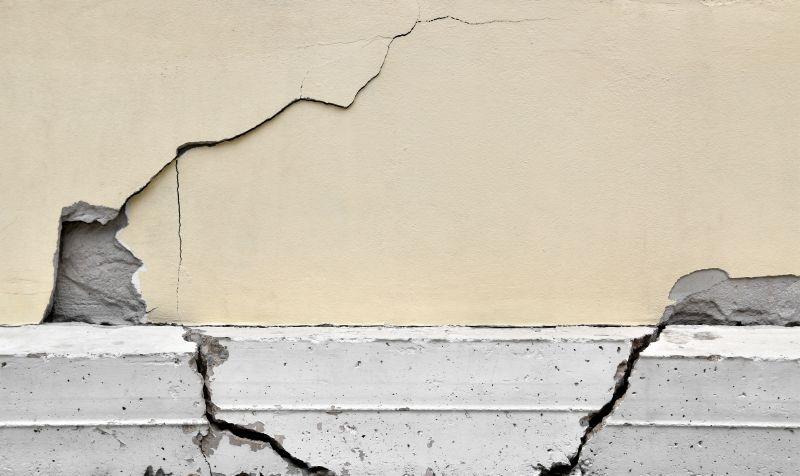
Due to the recurring drought periods, many homes are exposed to ground movements that can cause cracks. To help homeowners protect their properties before damage becomes too severe, the State continues its prevention efforts through the Clay Prevention Fund. Eligibility for this aid has recently been relaxed, and a new zoning system extends the scheme.
How to access the Clay Prevention Fund?
Since October 2025, a new prevention aid (the Clay Prevention Fund) has been piloted by the State in 11 pioneer departments: Allier, Alpes-de-Haute-Provence, Dordogne, Gers, Indre, Lot-et-Garonne, Meurthe-et-Moselle, Nord, Puy-de-Dôme, Tarn, and Tarn-et-Garonne.
This scheme allows owner-occupiers of individual houses located in areas with high exposure to RGA to benefit, subject to income conditions, from grants to finance vulnerability diagnostics and preventive works.
A decree dated April 23, 2026 expands the scope of the pilot program to include more households. Effective since May 1, 2026, the text introduces these relaxations:
-
Eligible houses must now have a maximum of 3 levels (basements and attics are considered levels), compared to 2 levels previously;
-
Study phase: even if your house has cracks, you can still benefit from aid dedicated to vulnerability diagnostics (no longer any conditions related to cracks);
-
Works phase: for aid dedicated to this phase, the maximum crack width condition is increased to 5 mm (instead of 1 mm).
You can use the simulator (updated with the new zoning) to check your eligibility for the aid: Eligibility simulator for the Clay Prevention Fund.
New zoning for RGA exposure starting July 1, 2026
To account for the high rate of claims recorded in recent years, a new zoning system for RGA exposure is being implemented as of July 1, 2026 (decree dated January 9, 2026).
The new map shows an increase in medium and high exposure zones, which now cover 55% of the territory (compared to 48% in 2020). 12.1 million existing individual houses are affected (representing 61.5% of individual houses).
This new zoning also applies to: promises of sale or authentic deeds of sale for buildable undeveloped land; contracts for the construction of individual houses.
Superficial clay soils can change volume due to variations in water content linked to weather conditions. They shrink during drought periods ("shrinkage" phenomenon) and swell when rains return ("swell" phenomenon). These changes are slow but can reach significant amplitudes capable of damaging buildings located on these soils.
For more information, consult the file on clay shrinkage-swell on the Géorisques website.
Legal texts and references
See also
-
Homes weakened: are you eligible for the new Clay Prevention Fund? Service Public
-
Clay shrinkage-swell in construction Ministry in charge of the environment
Agenda
-
From June 1, 2026 to Jan 15, 2027 Higher education How to benefit from Parcoursup mobility aid? Published on May 12, 2026
-
From June 24 to July 21, 2026 Sales What are the dates for the summer sales 2026? Published on May 7, 2026
-
From June 20, 2025 Sustainable consumption Energy label extended to smartphones and tablets from June 20 Published on June 12, 2025
Source: Service-Public particuliers