
Source date: 2026-05-20
Close Interested in this topic?
Receive an email as soon as an article is published by the editorial team on: Taxes (taxpayer, taxation, etc.), Housing
Close This topic has been added to your alerts
You will receive an email as soon as an article is published by the editorial team on: Taxes (taxpayer, taxation, etc.), Housing.
You can unsubscribe at any time via my account > my alerts.
A single tax on vacant housing from 2027 Published on May 21, 2026 - Service Public / Directorate for Legal and Administrative Information (Prime Minister)
The 2026 Finance Act changes the taxation of vacant housing. Currently, there are two distinct taxes, one or the other applicable depending on the municipality where the vacant property is located. These two taxes will merge in 2027. Service Public explains.
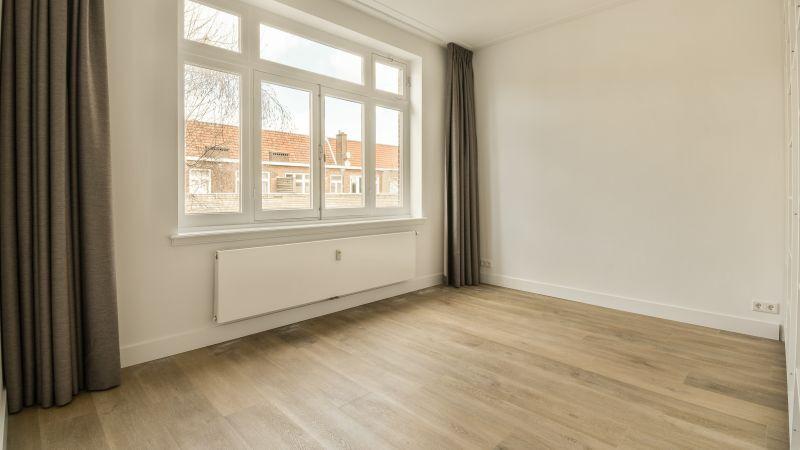
Image 1 Credits: Casa imágenes - stock.adobe.com
A property is considered vacant, from a tax perspective, when it is notably:
-
used for residential purposes;
-
unfurnished (or furnished insufficiently to allow for decent habitation);
-
equipped with basic comfort elements (electrical installation, running water, sanitary facilities, etc.);
-
free of any occupancy for a certain period.
Currently, if you own a vacant home, you may have to pay the annual tax on vacant housing (TLV) or the residence tax on vacant housing (THLV), depending on the municipality where your property is located.
-
You must pay the TLV if you are the owner or usufructuary of a home that has been vacant for at least one year as of January 1st of the tax year, and if this property is located in a municipality in a tight market area (i.e., a municipality characterized by a significant imbalance between housing supply and demand, leading to difficulties in accessing housing in the existing residential stock). The list of municipalities belonging to a tight market area is set by decree. You can check if the TLV applies in your municipality using the Service Public simulator.
-
You must pay the THLV if you are the owner or usufructuary of a home that has been vacant for more than 2 years as of January 1st of the tax year, and if this property is located in a municipality that has decided to implement this tax (this municipality must be located outside the application zone of the annual tax on vacant housing – TLV). You can check if the THLV applies to vacant homes in your municipality using the Ministry of City and Housing simulator.
The 2026 Finance Act merges these two taxes, following an amendment introduced in the Senate. In the purpose of this amendment, it is specified that this merger is carried out "for the sake of simplification and clarity," as the coexistence of the two taxes "causes some confusion."
As of assessments established for the year 2027, the tax on the vacancy of residential premises will therefore apply, replacing the annual tax on vacant housing and the residence tax on vacant housing. This new tax will be payable by the owner or usufructuary of the property concerned (or by the holder of a construction or rehabilitation lease, or by the holder of an emphyteutic lease, depending on the situation).
To determine whether a person is liable for the tax, the tax administration will rely on information provided under the declaration of occupancy of real estate.
In which municipalities will the new tax on the vacancy of residential premises apply?
A distinction is maintained between territories marked by a significant imbalance between housing supply and demand, and those not marked by such an imbalance. A decree will establish the list of municipalities located in a tight market area.
In municipalities located in a tight market area, the tax on the vacancy of residential premises will apply automatically. A home may be subject to it as soon as it has been vacant for at least one year as of January 1st of the tax year.
In municipalities located outside a tight market area, the application of the tax on the vacancy of residential premises will be optional; municipalities and intercommunal authorities may decide to introduce it following a deliberation. In municipalities and intercommunal authorities making this choice, a home will be subject to the tax as soon as it has been vacant for at least 2 years as of January 1st of the tax year.
Various exemption cases, applying across all municipalities, are provided. For example, the tax will not be payable when:
-
the vacancy of the home results from circumstances beyond the taxpayer's control (for example, a home listed for rent or sale at market price but finding no tenant or buyer);
-
the home was occupied for more than 90 consecutive days during the previous year in municipalities located in a tight market area, or during the 2 previous years in other municipalities;
-
the home is held by a low-rent housing organization (HLM).
Currently, the National Housing Agency (Anah) collects the revenues from the annual tax on vacant housing; and the revenues from the residence tax on vacant housing are collected by the municipalities and intercommunal authorities that have decided to implement this tax. The new tax on the vacancy of residential premises will be collected by the municipalities and intercommunal authorities.
How will the tax on the vacancy of residential premises be calculated?
The tax will be calculated based on the cadastral rental value of the dwelling. This value corresponds to the annual rent the property could generate if it were rented out.
The amount of the tax will be obtained by multiplying the rental value by a tax rate.
In municipalities located in a tight market area, this rate will be:
-
17% for the first year of taxation;
-
and 34% for subsequent years.
By way of derogation, a municipality may establish a higher tax rate following a deliberation by its municipal council. In any case, this tax rate may not exceed:
-
30% for the first year of taxation;
-
and 60% for subsequent years.
The tax rate for the TLV (the tax currently applicable in municipalities located in a tight market area) is similarly set at 17% for the first year of taxation; and 34% for subsequent years.
However, it is not planned for a municipality to be able to set a higher tax rate.
In municipalities located outside a tight market area, the tax rate will be freely set by deliberation of the municipal council, without however exceeding 50%.
Currently, the tax rate for the THLV (the tax currently applicable outside tight market areas) in a municipality is the same as that applied for the residence tax on secondary residences.
Legal texts and references
See also
-
Annual tax on vacant housing (TLV) and residence tax on vacant housing (THLV) Service Public
-
How to pay local taxes? Service Public
-
Real estate declaration: in which cases must you provide information in 2026? Service Public
-
Reform of taxation on vacant housing: what the 2026 Finance Act provides Ministry in charge of housing
Agenda
-
From May 1, 2026 Fiscal stamp Residence permits: increase in the amount of taxes charged to foreigners from May 1st Published on May 12, 2026
-
From June 1, 2026 to Jan. 15, 2027 Higher education How to benefit from Parcoursup mobility aid? Published on May 12, 2026
-
From June 24 to July 21, 2026 Sales What are the dates for the summer 2026 sales? Published on May 7, 2026
-
Until June 4, 2026 2026 Taxes Declaration of 2025 income: what is the deadline in your department? Published on April 8, 2026
Source: Service-Public particuliers